My First NH35 Build: Mistakes, Lessons, and a Watch I’m Actually Proud Of
After working through the ST36, I wanted to move on to something that felt a little closer to a modern watch build.
The NH35 was the obvious next step.
It’s widely used, affordable, easy to find parts for, and supported by a huge range of cases, dials, and hands. It also seemed like a good platform to learn on without worrying that one mistake would turn into an expensive disaster.
That turned out to be useful, because there were definitely mistakes.
Learning the Hard Way With the Dial
The first one happened almost immediately.
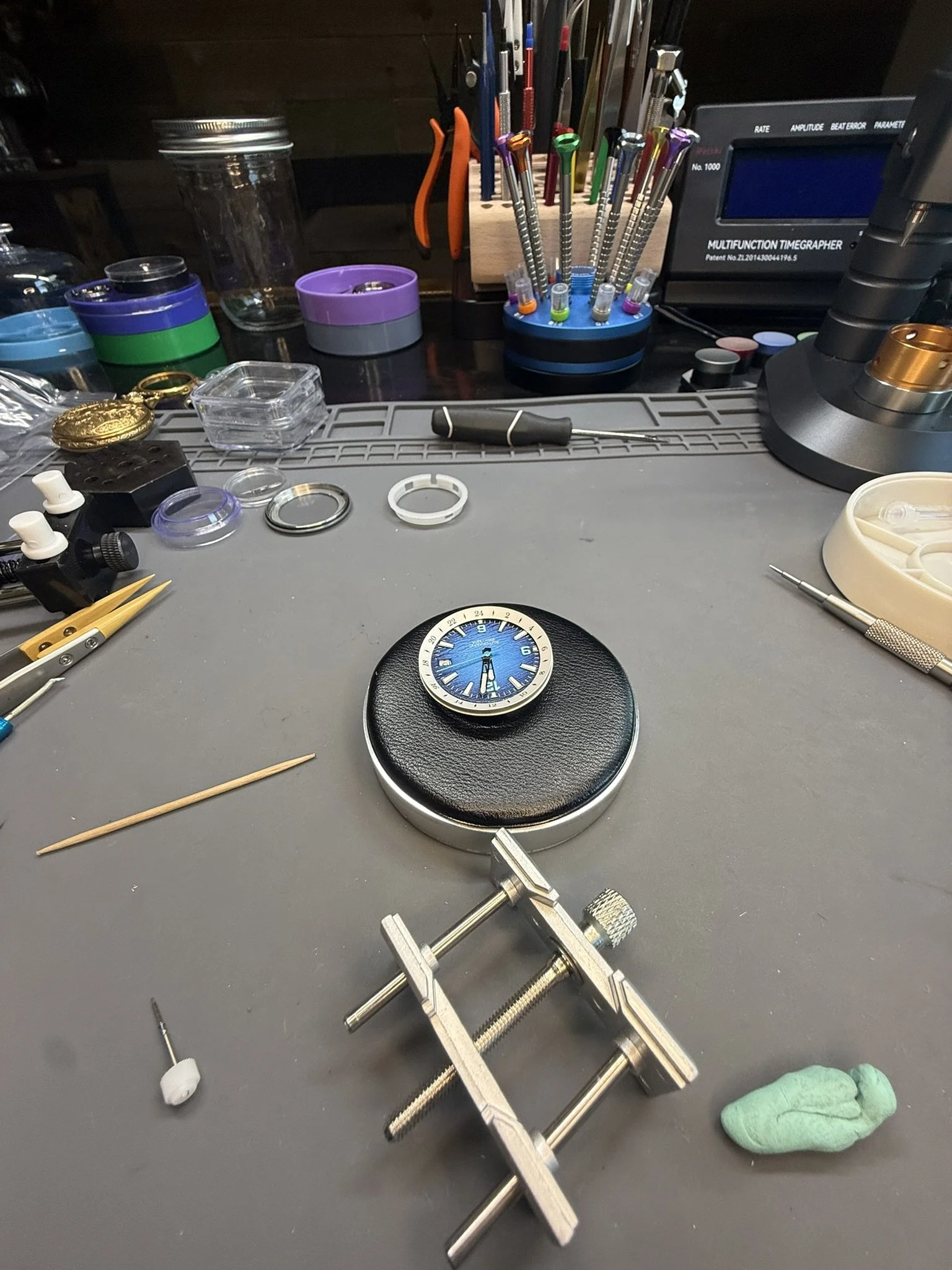
The dial came with multiple dial feet so it could fit different movement configurations. The process is simple enough: identify the feet you need and remove the extras.
I removed the wrong one.
That was a very efficient way to learn that lesson.
The dial was basically unusable for the build, so I had to order another one and wait for the replacement to arrive.
It was frustrating at the time, but it also made me much more careful about checking orientation and fitment before making any permanent modifications.
Figuring Out the Movement Holder
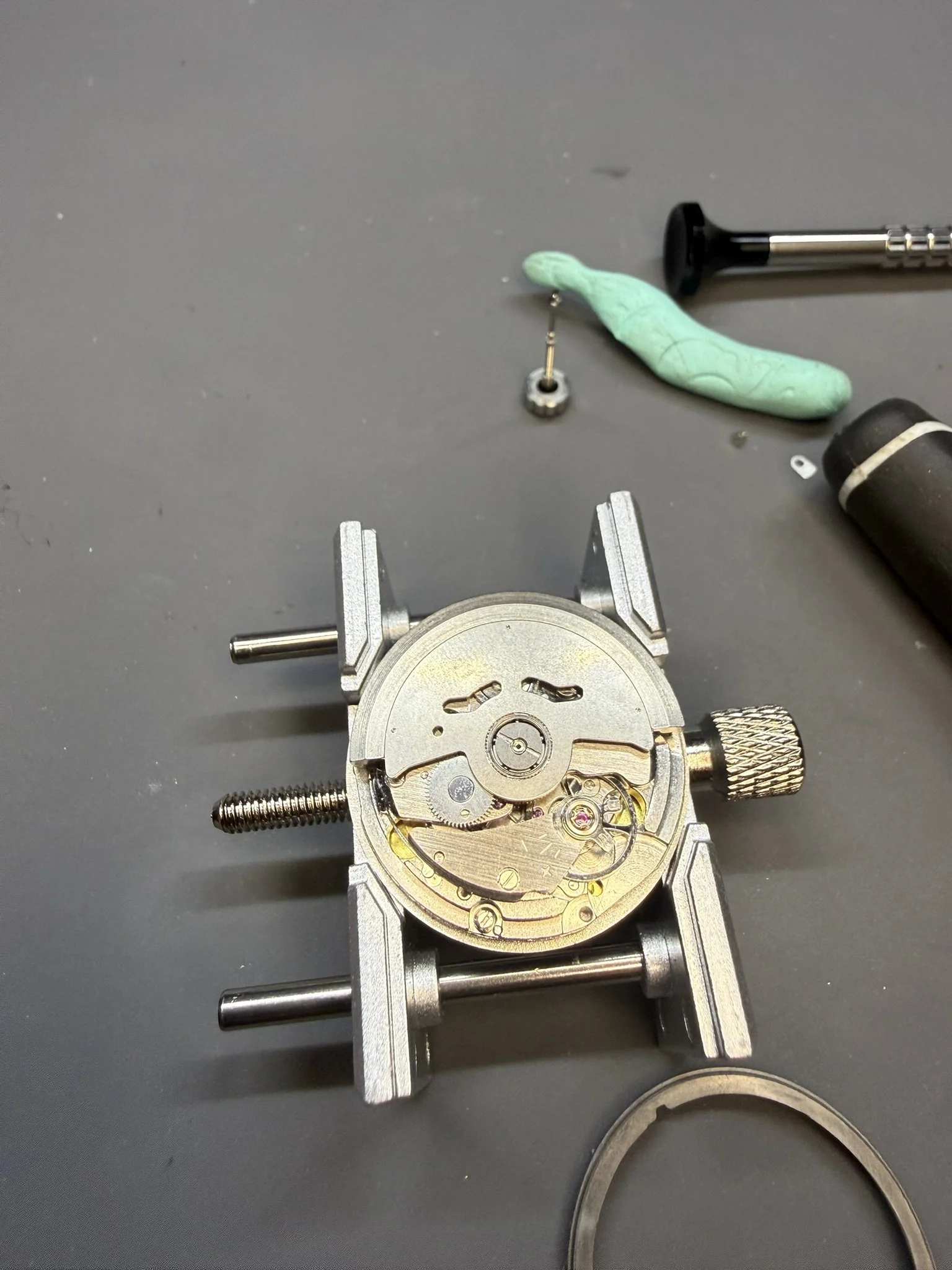
Once the replacement dial arrived, the next challenge was fitting the movement into the case.
The case came with a movement holder, but no instructions explaining how it was supposed to be installed or oriented.
So there was a fair amount of trial and error.
I tried a few different positions, removed it, reinstalled it, and eventually figured out how the holder was supposed to seat properly inside the case.
Once I understood it, it made sense.
Getting there took a little longer than expected.
The 24-Hour Chapter Ring
One of the design choices I made was using a 24-hour chapter ring.
There is one minor issue with that.
The NH35 is not a 24-hour or GMT movement.
So technically, the chapter ring serves no actual mechanical function.
It does not track another timezone, and there is no 24-hour hand to reference it.
It’s purely visual.
And I’m completely fine with that.
It adds something to the design, and sometimes that is reason enough to use a detail.
The Cheap Movement Experiment
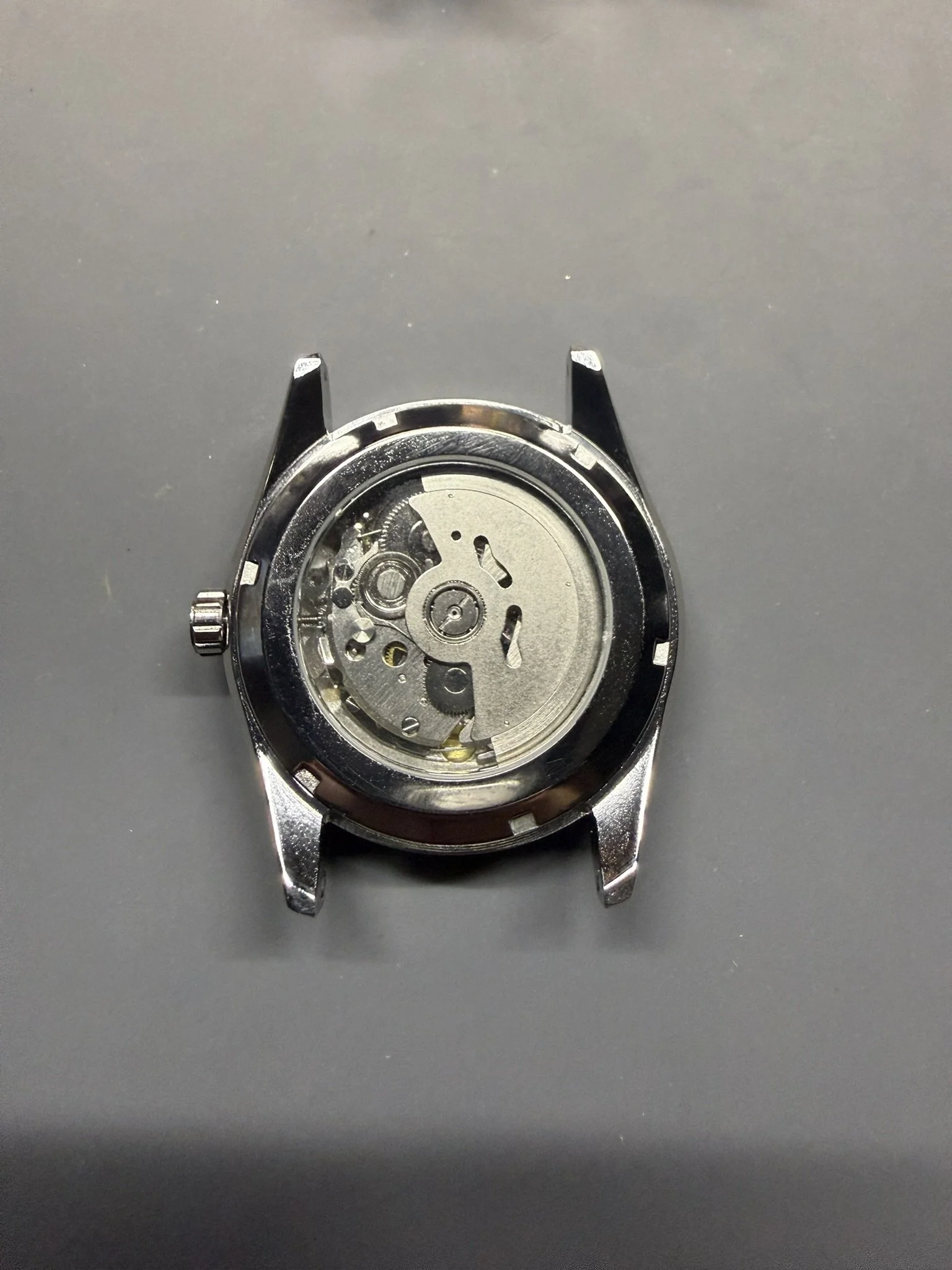
For this build, I used an inexpensive off-brand NH35-style movement that cost around $30.
It runs and does what it is supposed to do, but there is a noticeable difference in feel compared with better-quality movements.
The rotor is especially noisy.
You can clearly hear it moving inside the case.
For a practice build, that doesn’t really bother me. In fact, it was useful to experience firsthand how component quality affects the character of a finished watch.
The movement works, but the rotor noise is a pretty good reminder that it was, in fact, a $30 movement.
Using the Hand Press
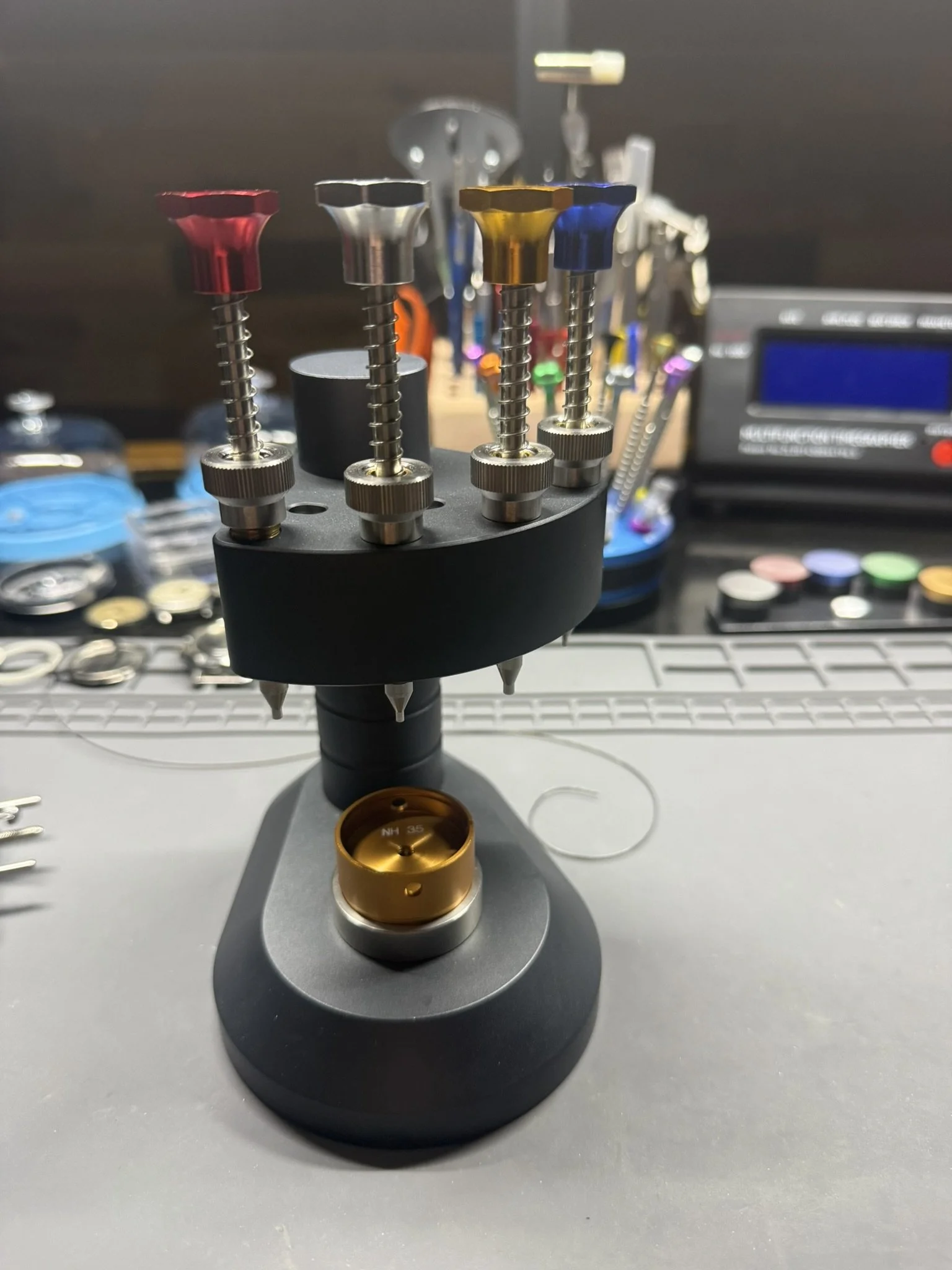
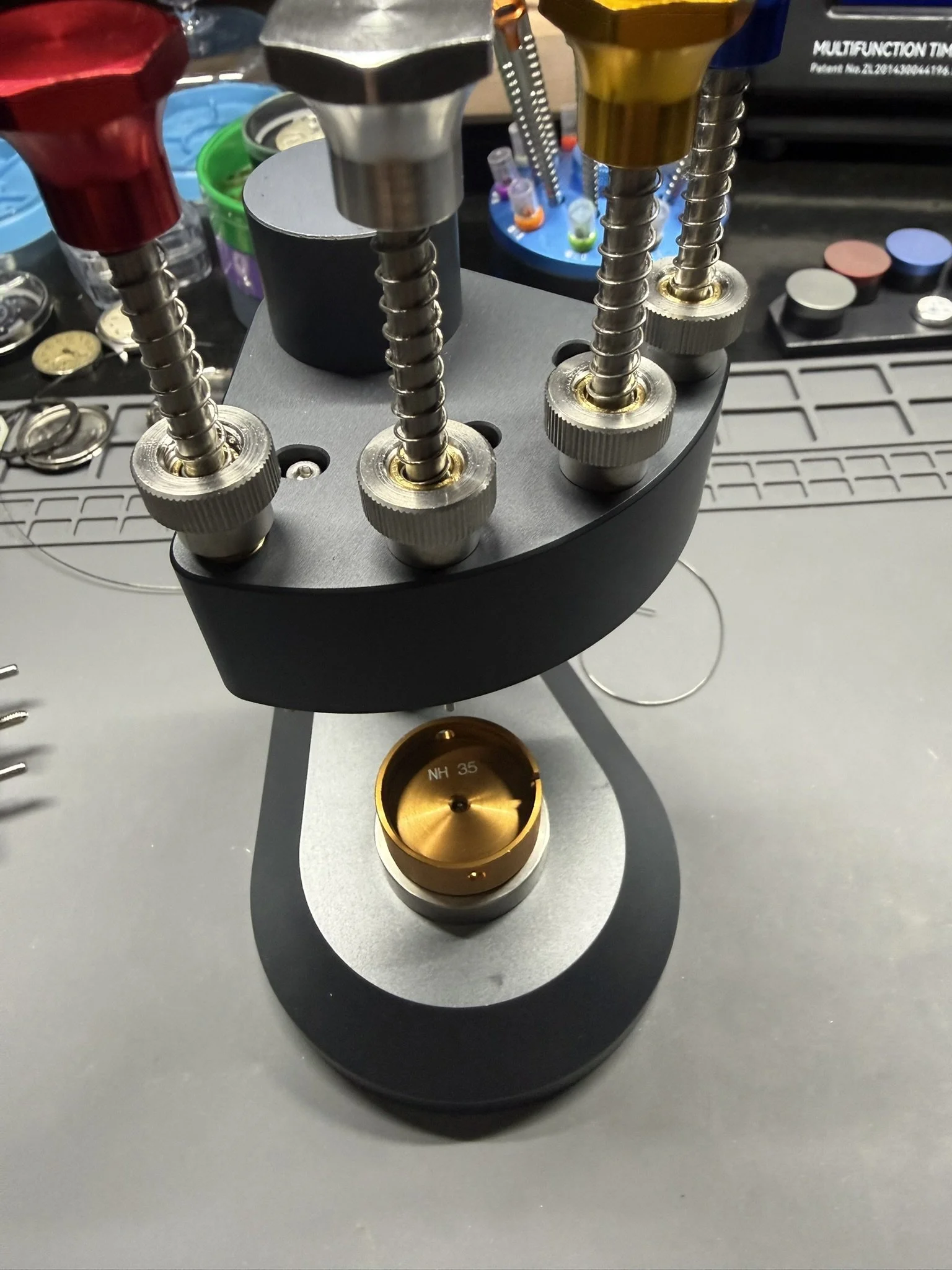
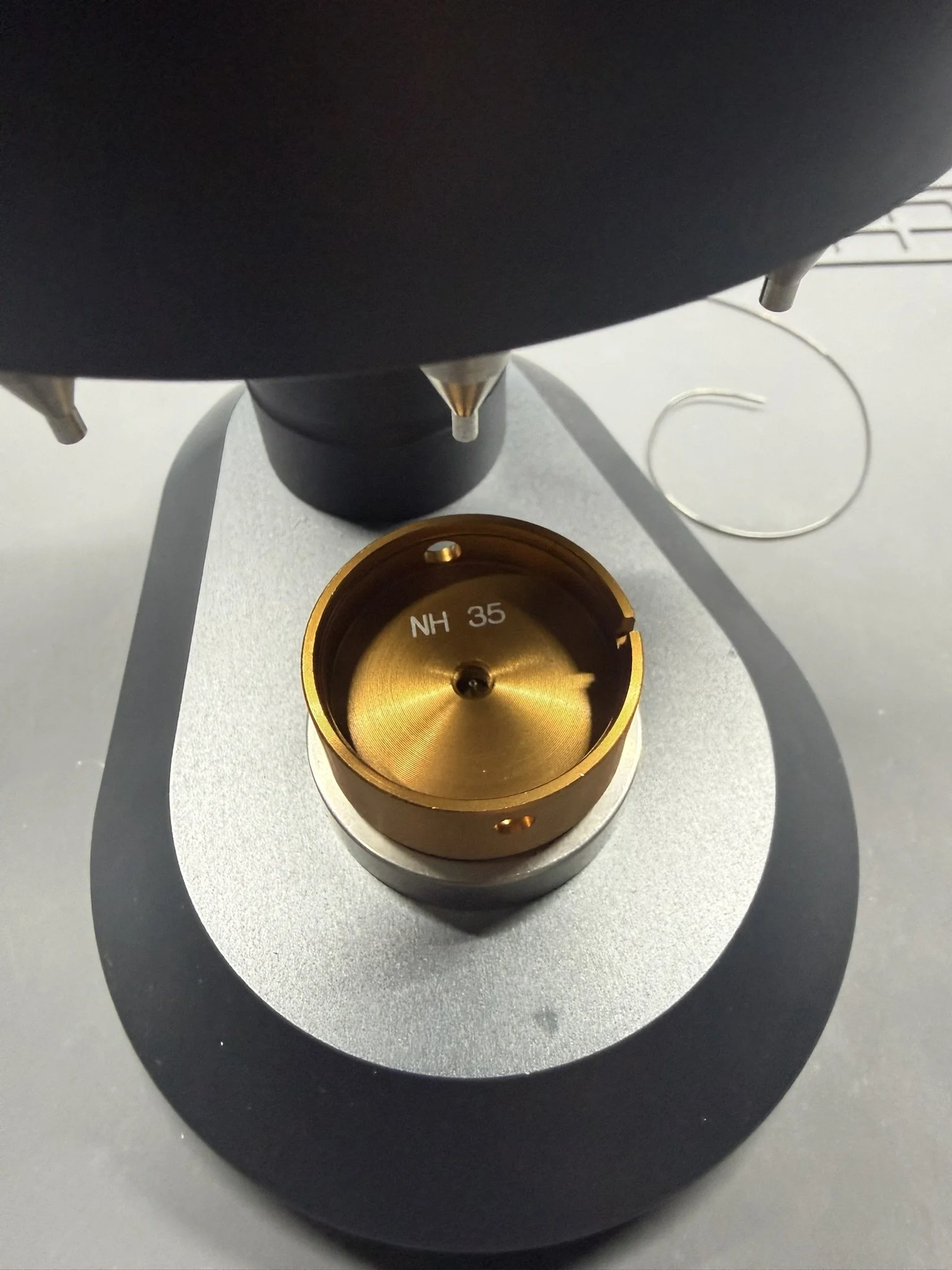
One tool that has worked out really well is my hand-setting press.
I’ve been using it to install the hour, minute, and seconds hands, and it has made the process much easier.
It gives me much better control over the pressure being applied and helps keep everything straight while installing the hands.
For anyone getting into watch building, this is one tool I would absolutely recommend.
Of course, installing the hands is only half the job.
You still have to make sure they clear each other properly.
Finding a Hand Clearance Problem
After the watch was assembled, I noticed the seconds hand was getting caught on the minute hand at about five minutes past the hour.
That meant reopening the watch.
I removed the movement, checked the hand heights and clearances, and made a few adjustments until all three hands could rotate freely without touching each other.
That was another good reminder that visual alignment from above does not always tell the whole story.
A hand can look perfectly installed and still create a problem during part of its rotation.
The 9 O’Clock Marker Came Loose
At some point during the build, the applied 9 o’clock numeral also came loose from the dial.
So the watch had to come apart again.
I carefully reattached the marker, lined it back up, and reassembled everything once more.
By the time the watch was finished, I had opened and closed it enough times that the process was becoming much more familiar.
That may not have been the original plan, but it was useful practice.
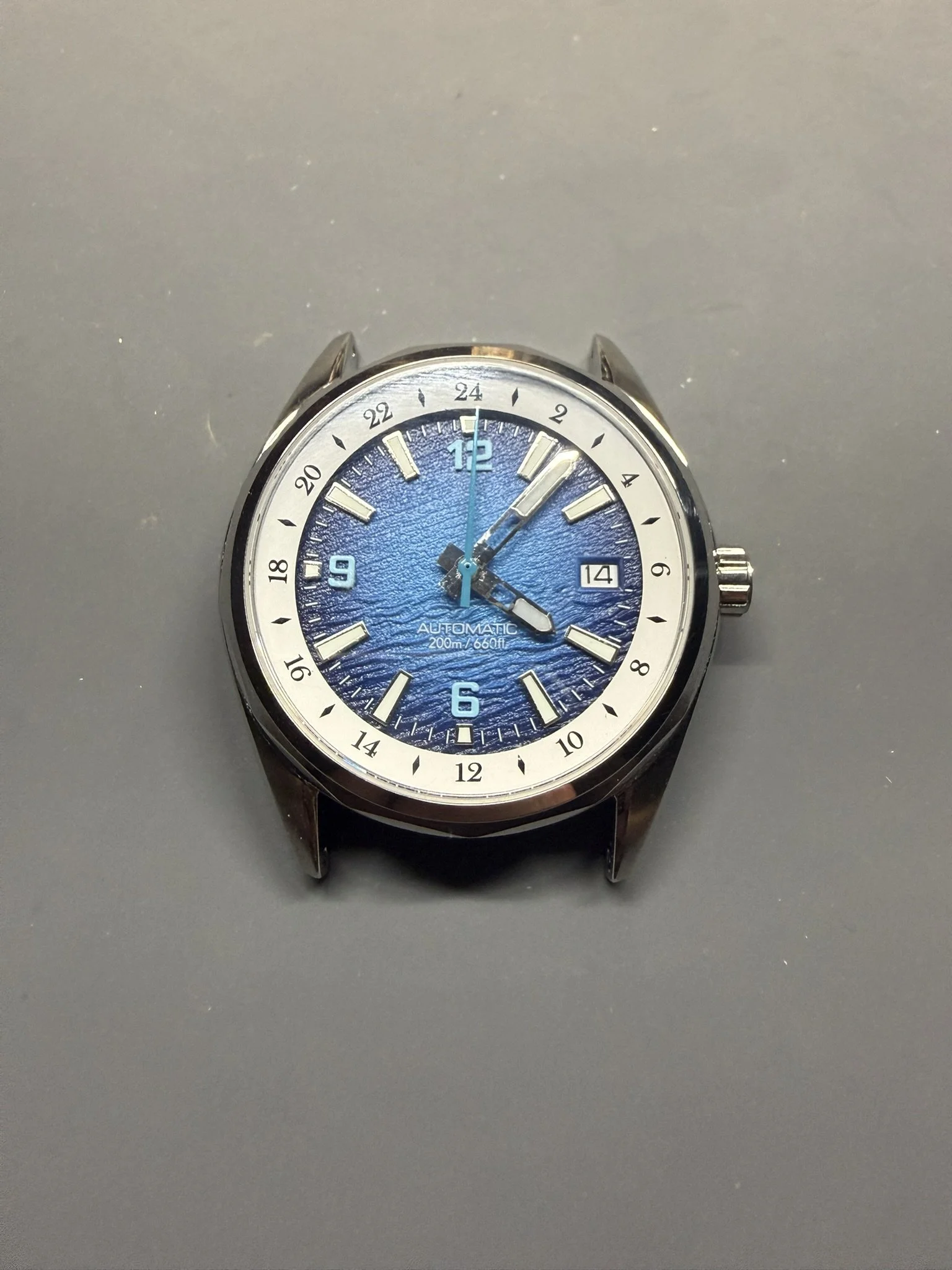
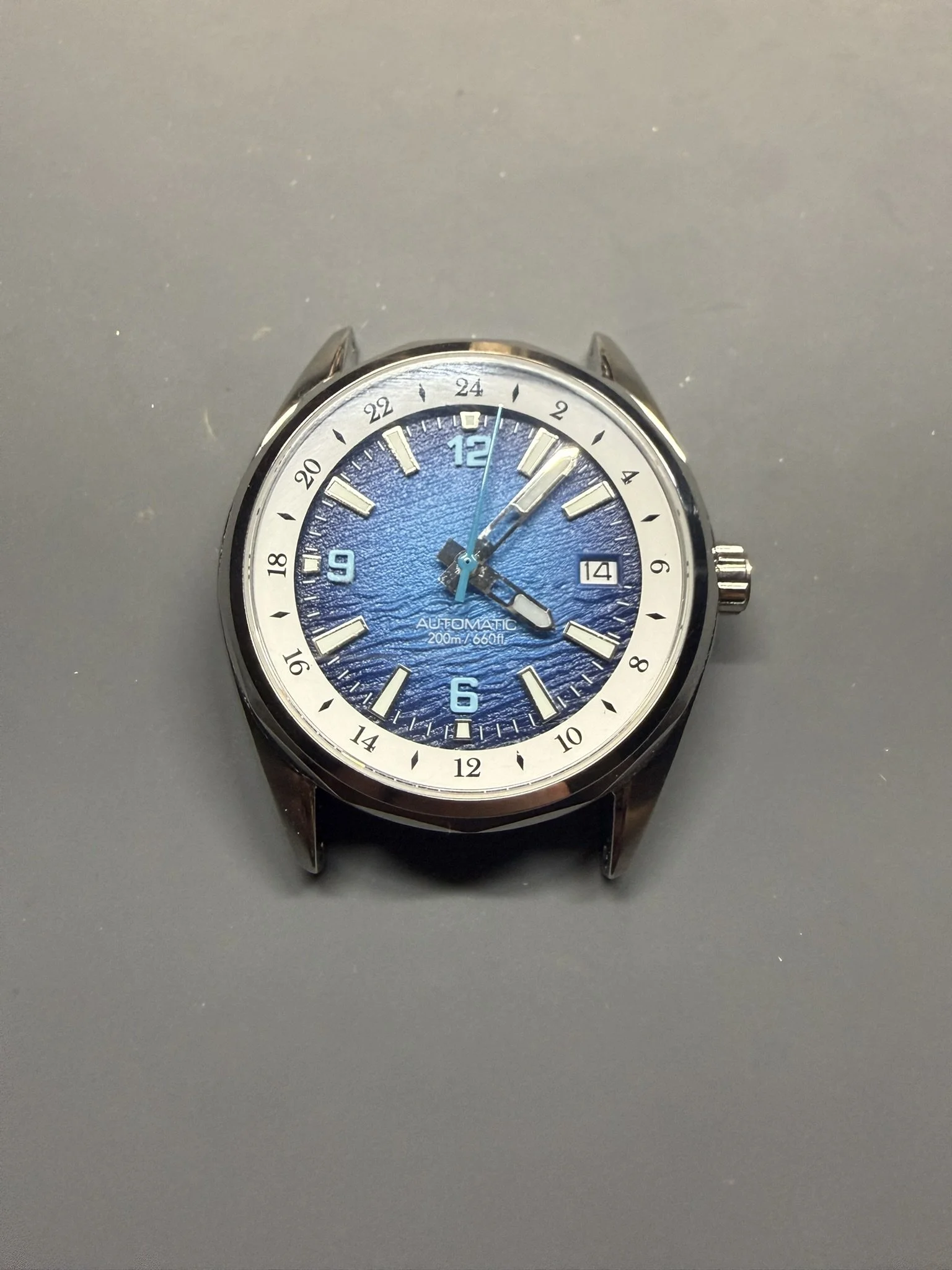
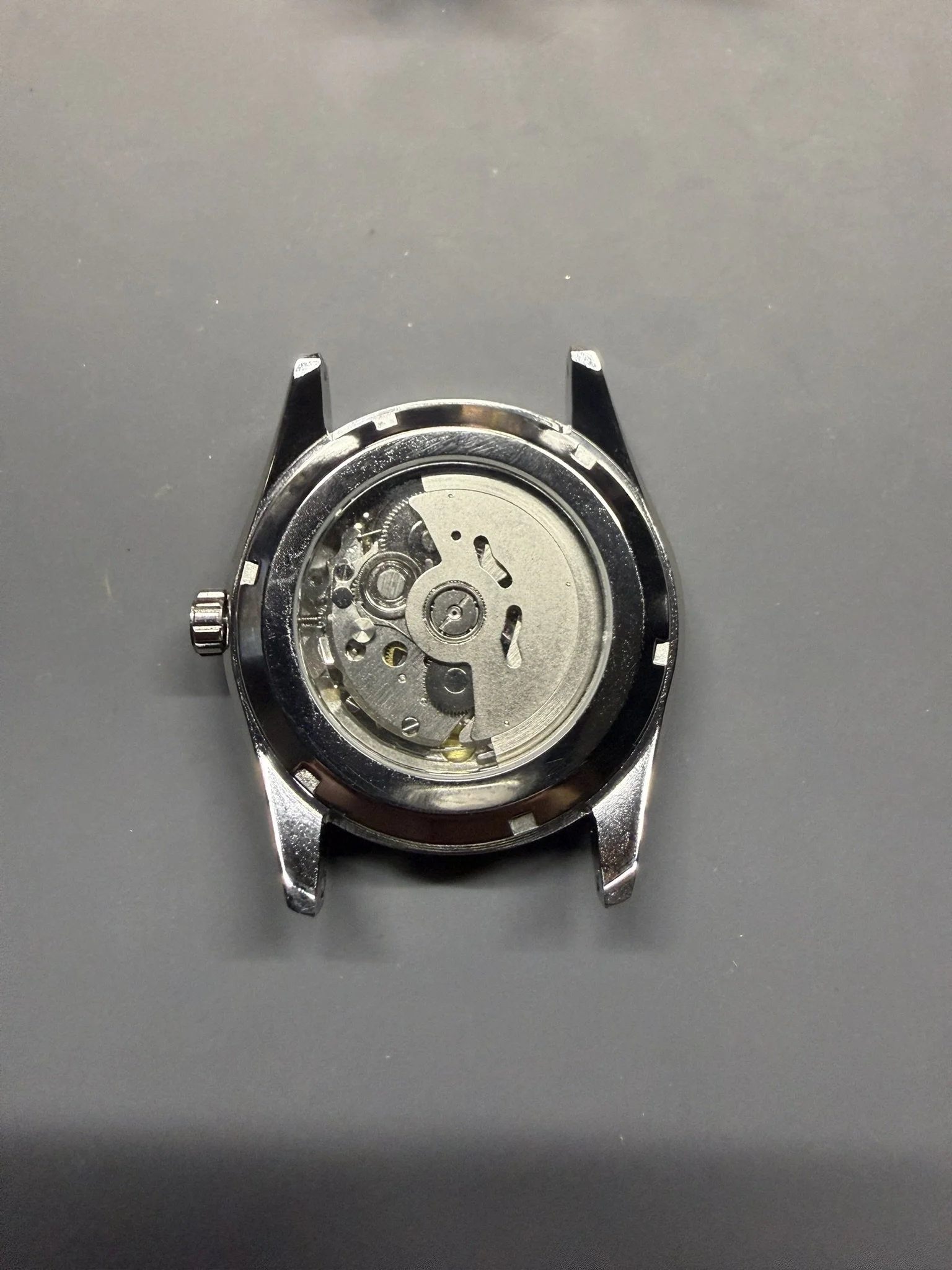
The Finished Watch
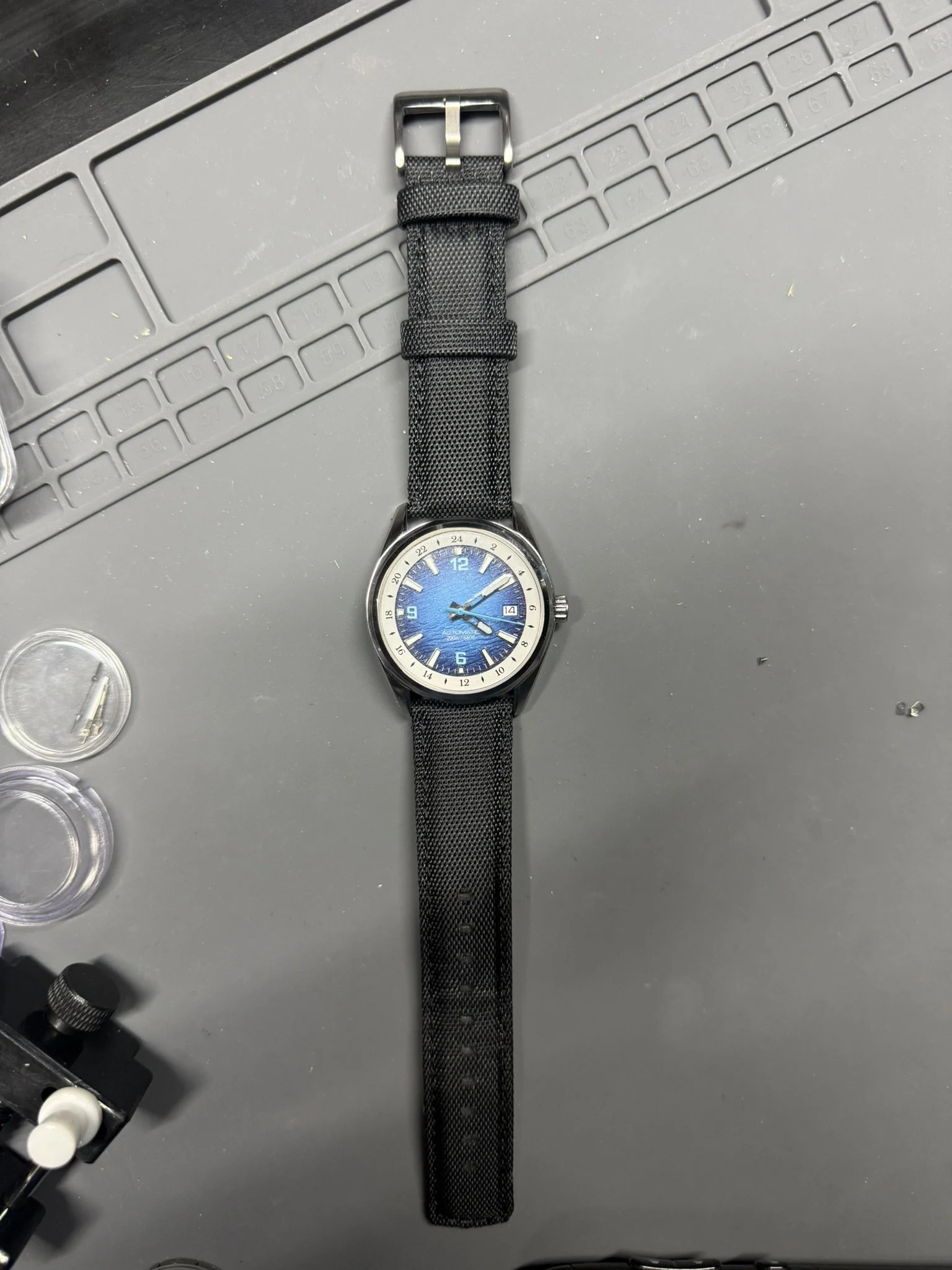
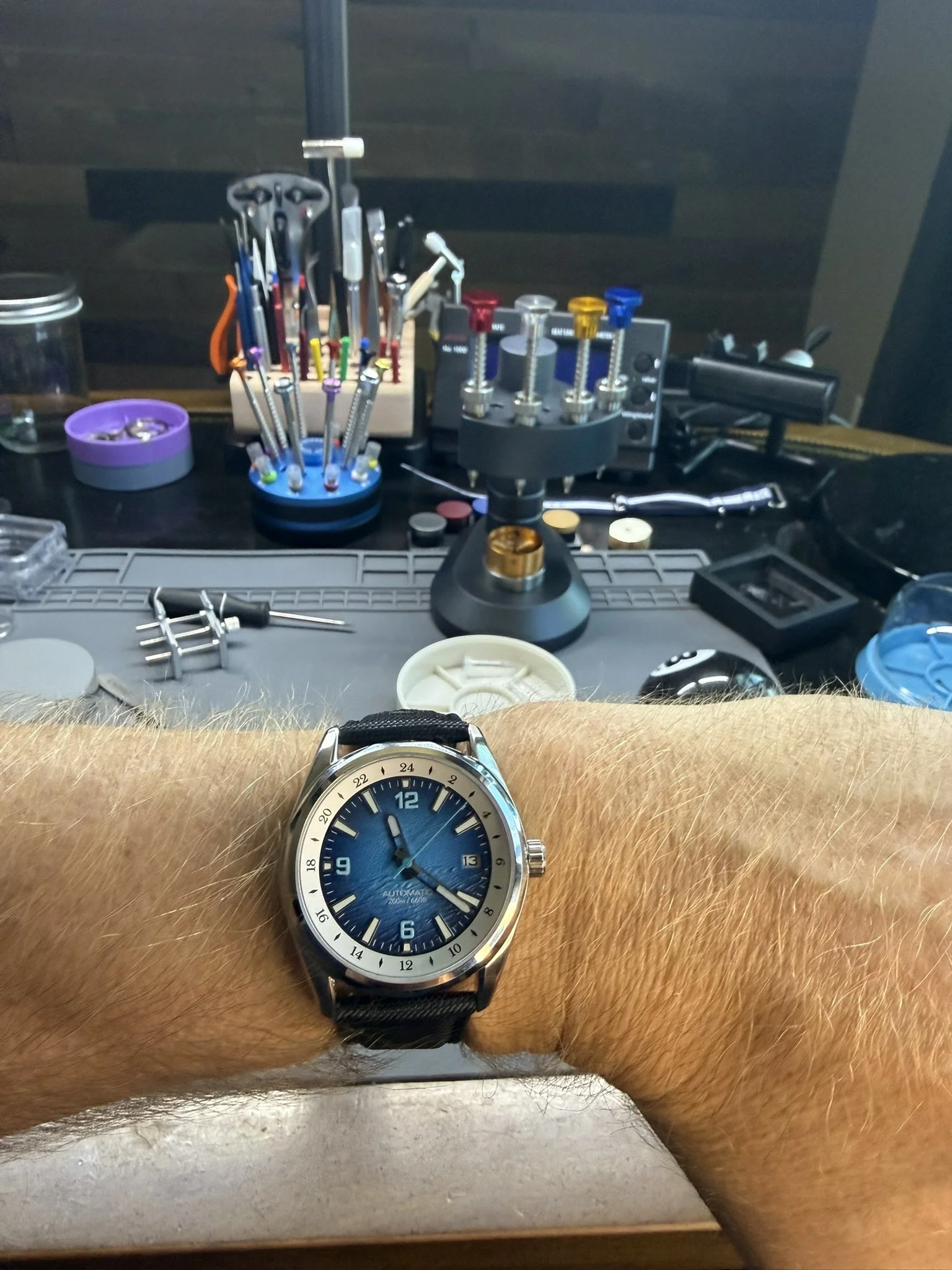
Despite the setbacks, I really like how the final watch turned out.
The first dial was ruined.
The movement holder took some figuring out.
The 24-hour chapter ring serves no practical purpose.
The movement rotor is louder than I would prefer.
The 9 o’clock marker came loose.
And I had to reopen the watch to fix the hand clearance.
But the finished watch looks good, runs, and taught me far more than a completely trouble-free build probably would have.
That is becoming one of the biggest lessons in this process.
Building a watch is not just about assembling parts.
It is about recognizing when something is wrong, understanding why it happened, and figuring out how to correct it.
Every project gets me a little more comfortable doing that.
And that experience is exactly what I’m after.